History of Trinity Episcopal Church
Records detailing the earliest days of Trinity Episcopal Church are limited in terms of number and content. However, according to a 2012 report written by the Logan County Genealogical Society, the people who ultimately formed the church were meeting as early as 1817 when, in December of that year, Episcopal missionary Rev. Joseph Jackson visited the area to preach. He reported his hearers to be “persons of intelligence and refinement who had no satisfaction of the rude vociferations which are too commonly substituted for preaching.” During his visit, Rev. Jackson advised against forming a congregation, citing the “present lukewarm professors of the Episcopal persuasion.”
In 1829, Russellville was established as an Episcopal preaching station along with Hopkinsville, Clarksville, and other nearby towns. In this same year, the Episcopal Diocese of Kentucky was also formed.
Trinity Church was officially organized as a congregation in 1836 during the Episcopate of the Right Reverend Benjamin Bosworth Smith, the first Bishop of the Diocese of Kentucky. This formal establishment marked a key milestone in the church's history. By 1838, the congregation was reported to be worshiping in a “small but neat little sacred edifice,” although its actual location remains unknown.
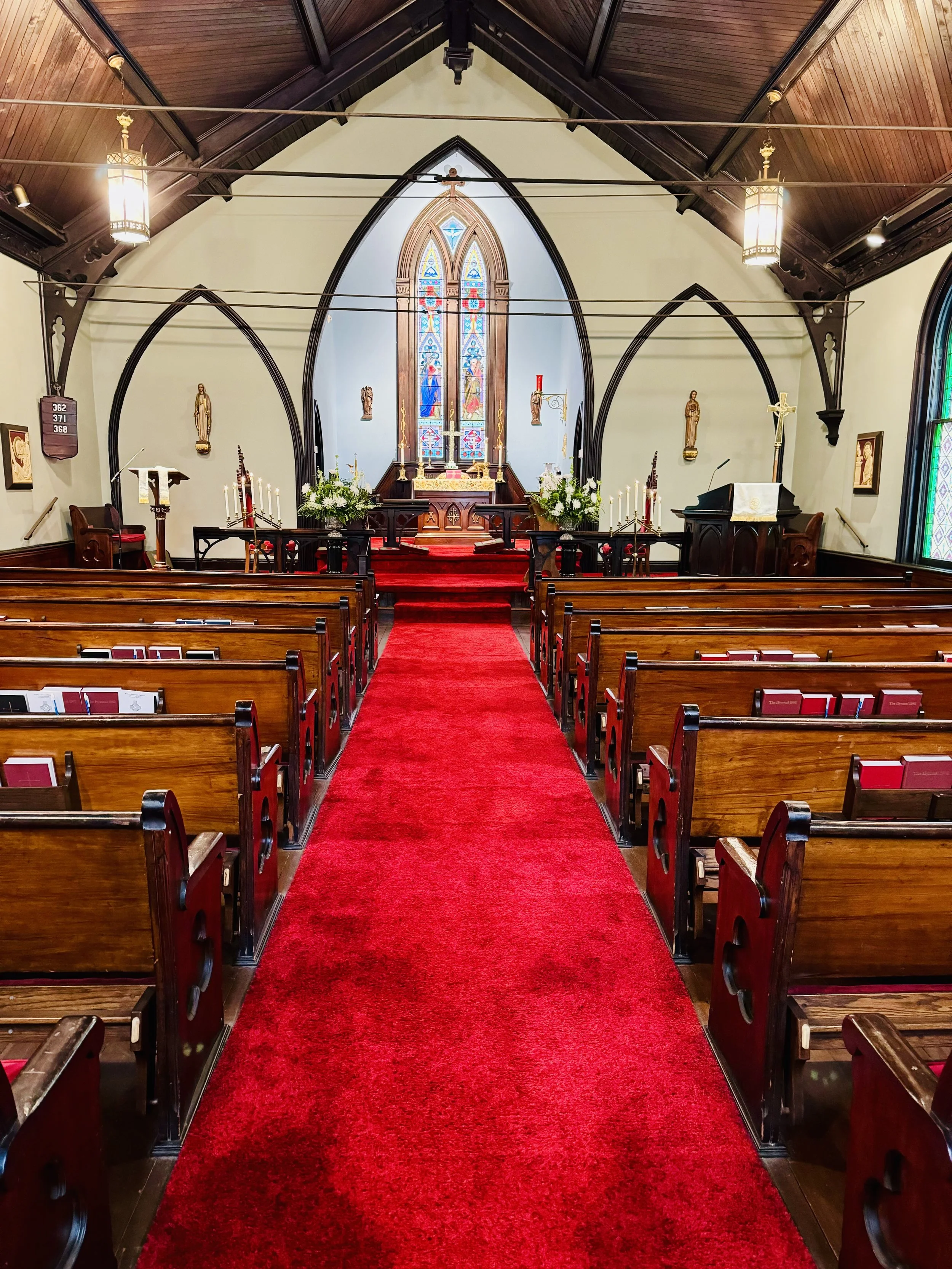
The current church building, constructed in 1883, exemplifies a post-Civil War Gothic Revival style. In 1891, the structure was consecrated to the worship of Almighty God on September 29th, the Feast of St. Michael and All Angels. The consecration was performed by the Right Reverend T. U. Dudley, the Second Bishop of the Diocese of Kentucky, after all congregational indebtedness had been resolved. The wrought iron fence that currently frames the church lot was erected in 1893, and the first electric lights were installed in 1894, adding to its historic features.
Since its construction and consecration, Trinity Church has undergone several changes and upgrades. Despite these changes, the church building and grounds have been lovingly maintained to reflect their original ambiance and historic character, fostering a sense of connection to past generations of worshipers and to the Russellville community.